

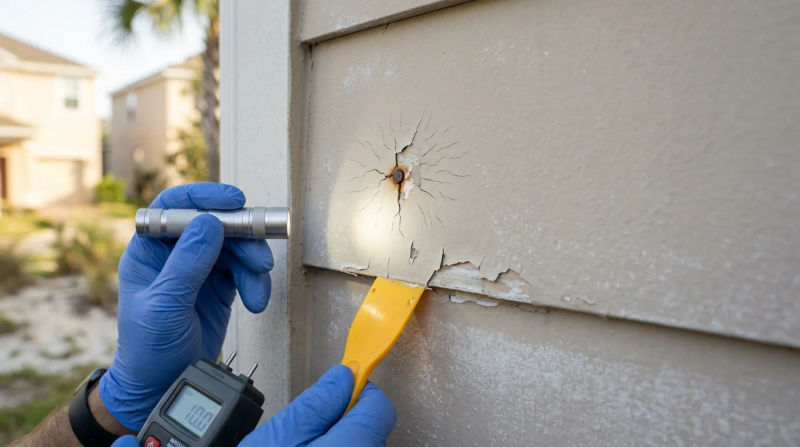
As you walk around your property this October, enjoying the slightly cooler, drier air, you might run a hand along your home's siding and notice something unexpected: a powdery, colored dust comes off on your fingers. Or perhaps you’ve noticed the color on the west-facing side of your house looks a little duller and more washed-out than it did last year. After a long, hot, and humid Asbury Lake summer, your home's exterior paint has been under significant stress. The arrival of fall is the perfect time to inspect your siding for the early warning signs of paint failure, allowing you to address small issues before they become large, costly problems.
As a coatings specialist with over a decade of experience in Florida, I've seen firsthand how our unique climate can challenge even the most robust paint jobs. Understanding what to look for can save you time, money, and frustration down the road.
Common Signs and Symptoms
Recognizing siding paint failure starts with a careful visual inspection. Here are seven common signs that your exterior paint is beginning to break down, especially under the intense Florida sun and humidity.
- Chalky Residue: One of the most common issues we see is Asbury Lake chalky exterior paint. This happens when the paint's binder is broken down by UV exposure, leaving behind a dusty film of loose pigment. If you wipe your hand across the siding and it comes away with a chalky powder, the paint is oxidizing and losing its protective qualities.
- Blistering or Bubbling: Have you noticed bubbles or blisters forming on your paint's surface? This is a clear sign that the paint film has lost its adhesion. The primary culprit is moisture or heat. Trapped moisture turns to vapor when the sun heats the siding, pushing the paint away from the surface and forming a blister.
- Noticeable Fading: All paints fade over time, but rapid or uneven fading is a problem. The most common UV fading on painted siding signs are seeing a significant color difference between sun-exposed areas (like south and west walls) and more shaded sections. This indicates the paint's pigments are breaking down under intense sunlight.
- Cracking and Flaking: As paint ages and becomes brittle, it loses its flexibility. Temperature fluctuations cause the siding underneath to expand and contract, and the rigid paint film can't keep up, resulting in hairline cracks. Over time, these cracks widen, and the paint begins to flake off in small pieces.
- Widespread Peeling: Peeling is a more advanced stage of failure than blistering or flaking. It occurs when large sections of paint detach from the underlying surface. This often points to a significant adhesion problem, usually caused by moisture getting behind the paint film or poor surface preparation during the last paint job.
- Mildew, Mold, or Algae: Dark streaks, green patches, or speckled black spots on your siding are signs of organic growth. While some high-quality paints have mildewcides, their effectiveness diminishes over time. These organisms thrive in Florida's humid environment and can damage the paint film as they feed on its components.
- Warped or Rotting Siding: This is the most severe symptom and indicates the paint has completely failed its primary job: protecting the siding. If you see wood siding that is warping, soft to the touch, or crumbling, it means moisture has penetrated the substrate and rot has set in. This requires immediate attention.
What Causes This Problem
Understanding the root cause of paint failure is crucial for ensuring the next paint job lasts. In the Asbury Lake area, several factors work together to break down exterior coatings.
- Intense UV Radiation: Florida's sun is relentless. UV rays are the primary cause of chalking and fading. They break down the chemical bonds in the paint's resin and pigments, weakening the film and bleaching the color. This is why paints with high-quality UV inhibitors are essential for our region.
- Moisture and Humidity: This is the root of many siding paint blistering causes Florida. High humidity means moisture is always in the air, and it can become trapped behind a paint film if the surface wasn't properly prepared or if the paint was applied in humid conditions. This trapped moisture leads directly to blistering and peeling as the sun heats the house.
- Poor Surface Preparation: A successful paint job is 80% preparation. If the previous painters failed to properly clean, sand, and prime the surfaces, the new paint will not adhere correctly. Dirt, chalky residue, and mildew must be completely removed, and bare spots must be primed to ensure a strong bond.
- Improper Application: Applying paint in direct, intense sunlight or when humidity is too high can cause it to dry too quickly or cure improperly. This compromises the film's integrity from day one, leading to premature failure. Our trained crews constantly monitor weather conditions and follow standardized processes to ensure paint is applied under optimal circumstances.
- Building Design and Age: Many homes in Asbury Lake date back to the 1990s and 2000s. These large, often two-story homes with complex rooflines and mixed materials like stucco and siding can have many points where water can potentially intrude if not sealed correctly. An aging paint job on these structures may have cracks in the caulk around windows and trim, providing a direct path for moisture.
When to Call a Professional
So, you've identified one or more of the signs above. What's next? Deciding between a DIY fix and calling for professional help often comes down to the scale and severity of the problem.
You might be able to handle it yourself if:
- The issue is very small and isolated, like a tiny chip on a low-traffic area.
- You're touching up a paint job that is still in good overall condition (less than 2-3 years old) and you have the original paint.
It's time to call an experienced professional when:
- You see widespread issues like chalking, fading, or blistering across multiple walls. This indicates a systemic problem, not an isolated flaw.
- The paint is peeling in large sheets, exposing the bare siding. This requires extensive scraping, sanding, and priming that is difficult to do correctly without the right tools and experience.
- There are signs of moisture damage, such as soft spots in wood or persistent mildew. A professional can diagnose the source of the moisture, which is critical to fix before repainting.
- The home is two stories or has complex architectural features. Working on high ladders or scaffolding is dangerous without proper training and safety equipment. Professional crews are equipped and insured for this type of work.
An expert evaluation can determine the true extent of the siding paint failure and create a plan that addresses the root causes, ensuring your investment in a new paint job is protected.
Conclusion
Your home's exterior paint is its first line of defense against the elements. Here in Florida, that defense is tested daily by intense sun and persistent humidity. By regularly inspecting your siding, especially as the seasons change, you can catch the early signs of wear and tear. Problems like chalking, minor cracking, and fading are signals that your paint's protective qualities are diminishing.
Waiting until you have widespread peeling or blistering can lead to more extensive and expensive repairs, including siding replacement. Acting early allows for a more straightforward repainting process that restores your home's beauty and, more importantly, its protection against moisture and UV damage.
If you notice any of these signs on your Asbury Lake home, we recommend contacting a local, qualified painting professional for an inspection. They can provide an accurate diagnosis and recommend the best course of action to keep your home protected for years to come.